Choosing a container sealing liner
A decision guide to Nisan's four container sealing liner types and the applications each one suits.
Primary liners (cap liners)
Primary liners sit inside the closure to create a secure seal between the cap and the container. Commonly manufactured from Expandable Polyethylene (EPE) foam, they provide cushioning and recovery that compensates for minor surface irregularities.
EPE foam also offers low water absorption and resistance to chemicals, which makes these liners suitable for chemical products, detergents, and pharmaceutical syrups.
Glue bonded liners
Glue bonded liners combine an aluminium foil layer with carton material, applied using adhesive to bond the container to the closure. They are designed for rigid containers that need a durable bond, commonly coffee jars and similar packaged products.
Two-piece induction seals
Two-piece induction liners create a hermetic seal by bonding a carton-based aluminium foil liner to the container rim through a non-contact induction sealing process. The liner has a sealing layer and a backing layer: during sealing the foil bonds to the rim while the backing stays inside the cap, so the closure can be reused after opening. Commonly used for edible oils, cosmetics, and beauty products.
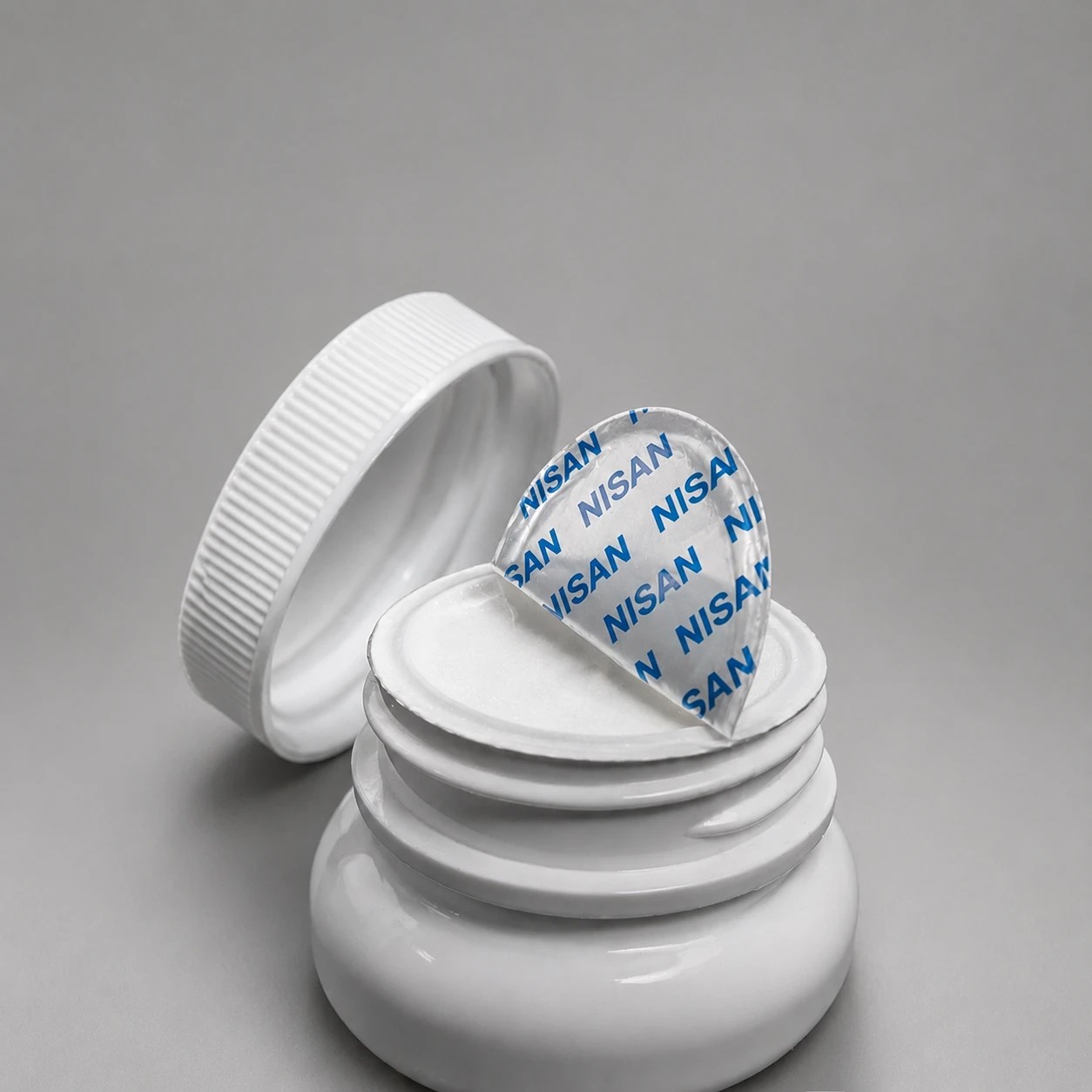
Tabbed liners
Tabbed liners are induction liners with an integrated pull-tab that improves opening convenience while keeping tamper evidence and airtight sealing. Half-moon pull tabs allow easy, controlled opening without compromising seal integrity.
Liner selection at a glance
| Liner | Material | Typical use |
|---|---|---|
| Primary (cap) liner | EPE foam | Chemicals, detergents, pharmaceutical syrups |
| Glue bonded liner | Aluminium foil + carton | Coffee jars, rigid containers |
| Two-piece induction seal | Carton-based aluminium foil | Edible oils, cosmetics, beauty |
| Tabbed liner | Induction liner with pull tab | Easy-open, tamper-evident closures |
Tamper evidence and leak prevention
Across all four types, Nisan's Sealing Solutions support product protection, tamper evidence, and leak prevention for food, beverage, pharmaceutical, chemical, veterinary, and industrial applications.
Related products
Related industries
Enquiries