Alu-Alu vs PVC and PVDC blister packaging: a barrier comparison
How the three common blister constructions compare on moisture barrier, cost, and pack format, and where the aluminium lidding foil Nisan makes fits in.
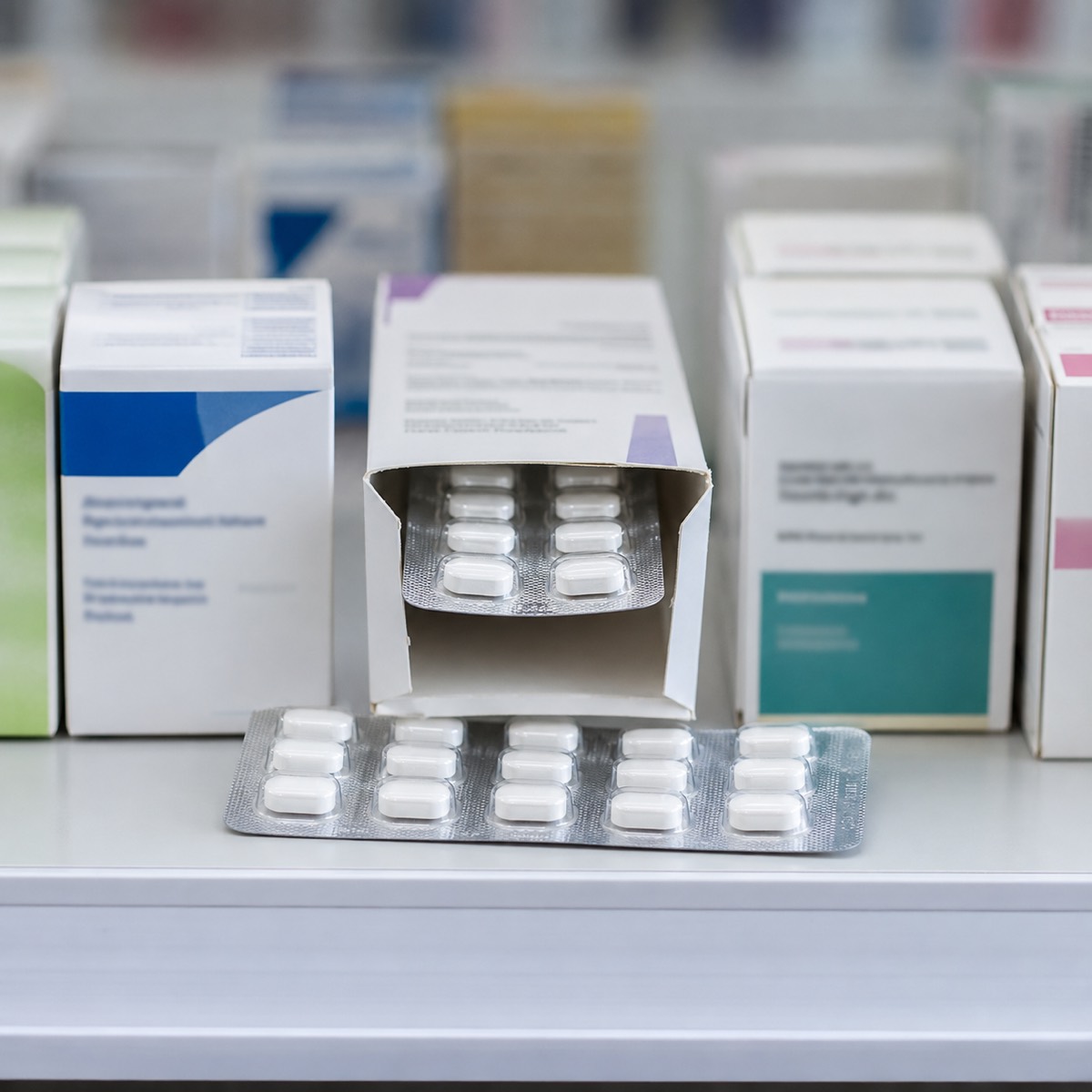
Two ways to build a blister
A blister is, in WHO's definition, a container of two layers, one of which is shaped to hold the individual doses.¹ What differs between blister types is how that shaped base is made, and the base material sets the barrier, the cost, and the pack shapes available.
A thermoformed base is heated and drawn into cavities: plain PVC film, or PVC coated with PVDC for a higher barrier. A cold-form (Alu-Alu) base takes a different route, an aluminium foil sandwiched between plastic films, shaped mechanically at ambient temperature rather than by heat.³
The moisture barrier, measured
The gap between the two is large and well documented. A stability study measured moisture permeation ranging from 0.259 mg per blister per day for PVC down to 0.001 for cold-form aluminium; after six months at 40 °C and 75% relative humidity, a moisture-sensitive tablet retained 84% of its active ingredient in PVC blisters but 100% in cold-form aluminium.² A comparative analysis similarly describes Alu-Alu as an exceptional shield against humidity, oxygen and UV, while PVC offers a good, but not equal, barrier.³
This is why medicines sensitive to moisture, light or oxygen (the three factors WHO singles out for protection throughout shelf life¹) often move to a PVDC or Alu-Alu construction.
Where PVDC sits
PVDC is not a separate base but a coating applied to PVC film, raising its moisture and oxygen barrier while keeping the pack thermoformable and transparent. It sits between plain PVC and cold-form aluminium: a stronger barrier than PVC alone, at lower cost and with more format freedom than Alu-Alu, but without aluminium's near-total barrier.
Cost, format and footprint
The strongest barrier is not automatically the right one. The same comparative analysis notes that Alu-Alu is generally more expensive and, being cold-formed, suits standard-sized blisters, whereas PVC and PVC/PVDC are more economical and flexible across a wider range of blister shapes and sizes.³ Cold-form cavities are also deeper and opaque, so the tablet cannot be seen through the pack.
The practical choice is a match between how sensitive the product is and what the pack has to cost and look like, not a race to the highest barrier.
Comparison at a glance
| Property | PVC | PVC + PVDC | Alu-Alu (cold form) |
|---|---|---|---|
| Forming method | Thermoformed | Thermoformed | Cold-formed |
| Moisture barrier | Baseline | Improved | Highest (near-zero) |
| Relative cost | Lowest | Moderate | Highest |
| Format flexibility | High | High | Standard sizes |
| Product visible in pack | Yes | Yes | No |
Where Nisan's foil fits
Across all three constructions, the lidding (the layer sealed over the filled cavities) is aluminium, because it isolates the dose from air and stays mechanically stable.⁴ That lidding layer is what Nisan makes.
Nisan's pharmaceutical blister foil is produced in 20, 25, and 30 micron across multiple temper grades, and is sealable to the common blister base substrates, PVC, PVDC, PP, and PE. Whichever base a packer chooses, Nisan supplies the aluminium lidding foil that seals it; the forming web itself, thermoformed film or cold-form laminate, is a separate material specified per line.
One trade-off applies to every high-barrier blister: because it combines plastic and aluminium in thin layers, it is hard to recycle and needs a separation step before the materials can be recovered.⁴ This is an industry-wide characteristic, noted here for completeness rather than as a Nisan-specific claim.
References
- 1.World Health Organization, Guidelines on packaging for pharmaceutical products. WHO Technical Report Series No. 902, Annex 9 (2002).
- 2.Allinson, Dansereau & Sakr, The effects of packaging on the stability of a moisture sensitive compound. International Journal of Pharmaceutics, 2001.
- 3.Patel, Patel, Dani & Zaveri, Alu-Alu Packaging vs Alu-PVC Blister Packaging: Waste to Value: A Comparative Analysis. International Journal of Pharmaceutical Sciences, 2024.
- 4.Çapkın & Gökelma, A review on characterization and recyclability of pharmaceutical blisters. Cleaner Waste Systems, 2023.
Related products
Related industries
Enquiries